The cost of custom sheet metal brackets includes more than material and individual processing operations. A quote may also include setup for each production run and, where needed, dedicated dies or fixtures. To compare prices, look at the order quantity, the operations included and the condition of the finished parts you will receive.
Brackets with similar shapes can have very different quotes when one includes self-clinching nuts, powder coating, dimensional checks after forming and individual protective packaging. This guide helps engineers and buyers understand those costs, compare suppliers and identify design changes worth reviewing.
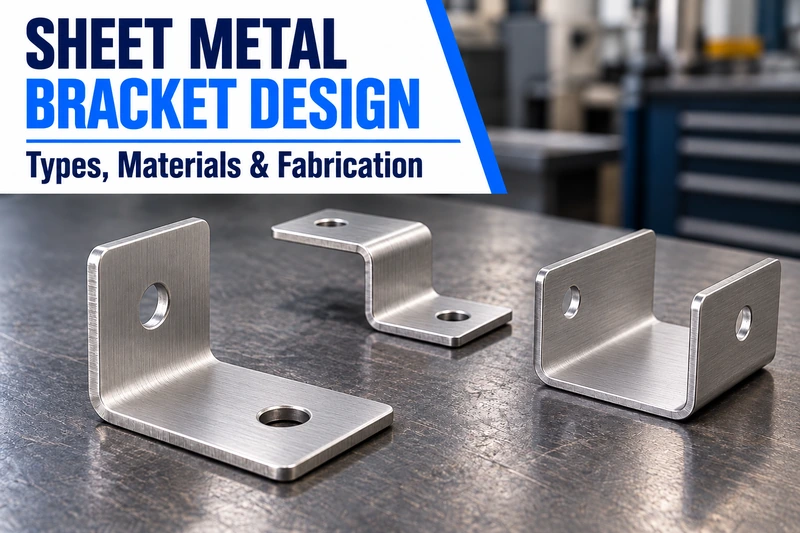
For geometry, materials and mounting requirements, you can also refer to our sheet metal bracket design guide.
Unit Price and Total Order Cost
A supplier may list setup separately or include an allocation in the unit price. Ask which charges apply outside the unit price and whether they occur only on the first order or on each production run.
Once the charges are clear, use this relationship to check the order total:
Order total = separately charged setup and tooling for this order + quantity × unit price + other separate charges
Batch setup covers preparation for that run, such as machine setup and first-article checks. Dedicated tooling covers investments such as stamping dies or special fixtures. Charges on later orders depend on ownership, maintenance, changes and the agreed terms for reuse. Confirm these two types of charges separately because they can follow different billing schedules.
The unit price may include material, cutting, bending, fastener installation, finishing and inspection. Other separate charges may include special packaging or freight. Use the supplier's actual breakdown when checking the total, and avoid adding an item again if it is already included in the unit price.
An Example of Setup Cost Allocation
Assume that setup and first-article checks for one batch cost USD 120, with a per-part charge of USD 3. This example has no separate charge for dedicated tooling, and other separate charges are set to zero. These are invented figures for explaining the calculation, not market prices or a Tongyong quote. Freight, taxes and later design changes are excluded.
| Order quantity | Setup allocation | Per-part charge | Order total | Average per part |
|---|---|---|---|---|
| 10 parts | 120 ÷ 10 = USD 12/part | USD 3 | 120 + 10 × 3 = USD 150 | USD 15 |
| 100 parts | 120 ÷ 100 = USD 1.20/part | USD 3 | 120 + 100 × 3 = USD 420 | USD 4.20 |
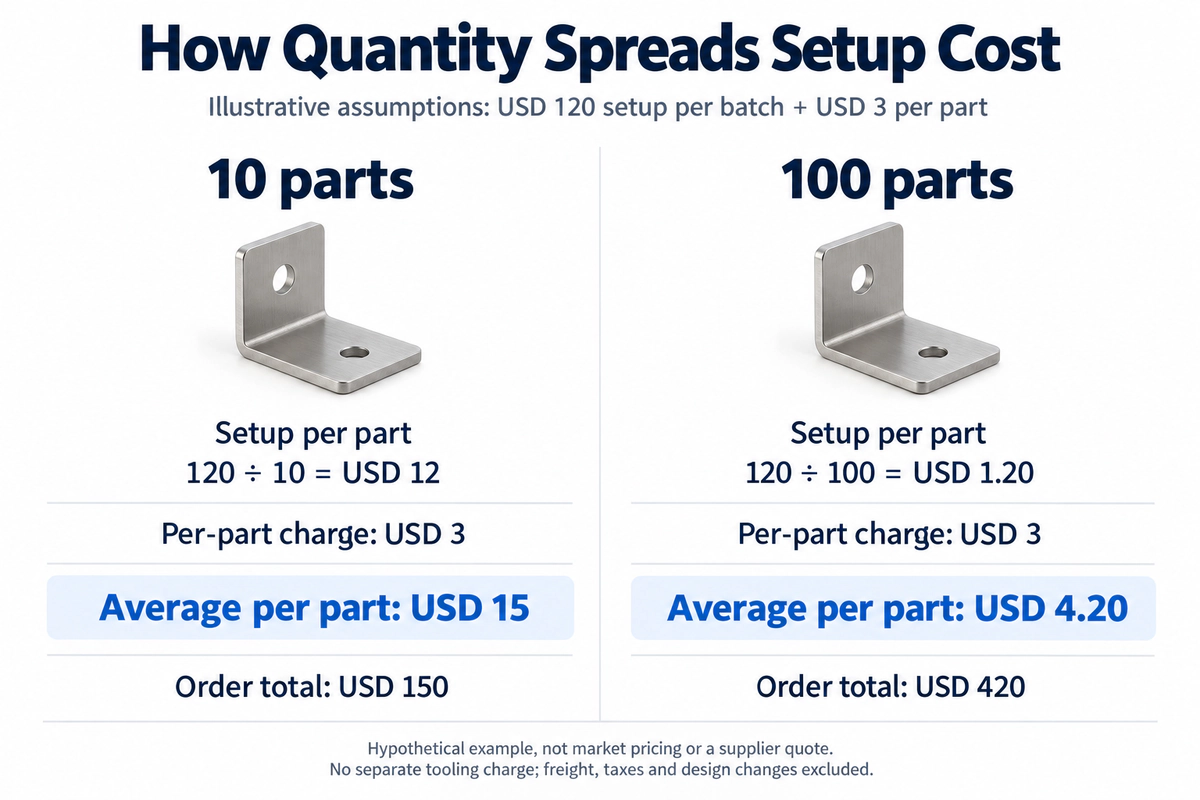
The average falls because more parts share the same setup charge; the order total still rises. In production, quantity can also change material purchasing, the manufacturing route, finishing batches and inspection arrangements. Ask for quotes at the quantities you actually plan to buy.
Ordering 100 parts in one release may therefore cost less per part than placing ten separate orders for ten parts. Repeat orders can still require setup, first-article checks and batch processing. When discussing annual demand, include the release quantity and delivery frequency.
Requirements That Can Change a Bracket Quote
Material and Flat Pattern Affect Sheet Usage
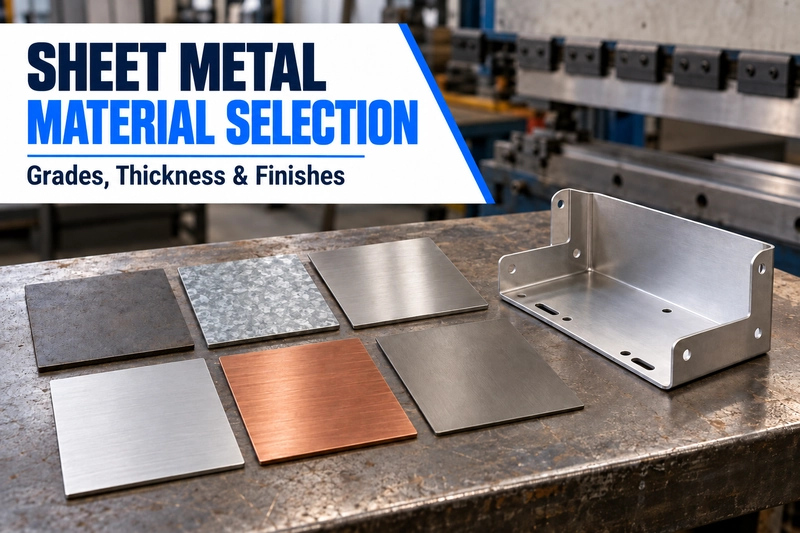
Specify the grade, condition or temper, and thickness. Simply calling out “aluminum” leaves important purchasing and forming conditions unresolved. If alternatives are acceptable, have engineering confirm the limits before asking for alternative quotes. Our sheet metal material selection guide discusses these choices in more detail.
Material cost also depends on the flat pattern and how parts nest on a sheet. A lightening hole reduces the finished part's mass, but its cutout may not be usable for another part, and the hole can add cutting time. Review the actual nesting layout and purchasing arrangement when assessing material savings.
Boothroyd Dewhurst's sheet metal cost estimating guidance considers material utilization, cutting, forming, tooling and subsequent operations separately. For bracket purchasing, compare the material specification, flat pattern and manufacturing route together. The metal price per kilogram alone does not establish the finished part price.
Bend Difficulty Matters as Well as Bend Count
A bracket with two bends does not necessarily cost twice as much to form as one with a single bend. Cost also depends on available tooling, how easily the part can be located and whether formed features interfere with later bends.
Two similar U-shaped brackets may need different tools or sequences because their opening widths, flange heights or return flanges differ. If a feature requires additional tooling or machining after forming, ask the supplier to identify it on the drawing. That gives engineering a specific change to evaluate.
A bend radius that suits appropriate existing tooling can help reduce additional tooling and setup work. Provide the material, thickness and proposed radius together so the supplier can check tool compatibility. Any radius change also needs to preserve the required fit.
Fasteners and Welding Add Work Beyond Purchased Items
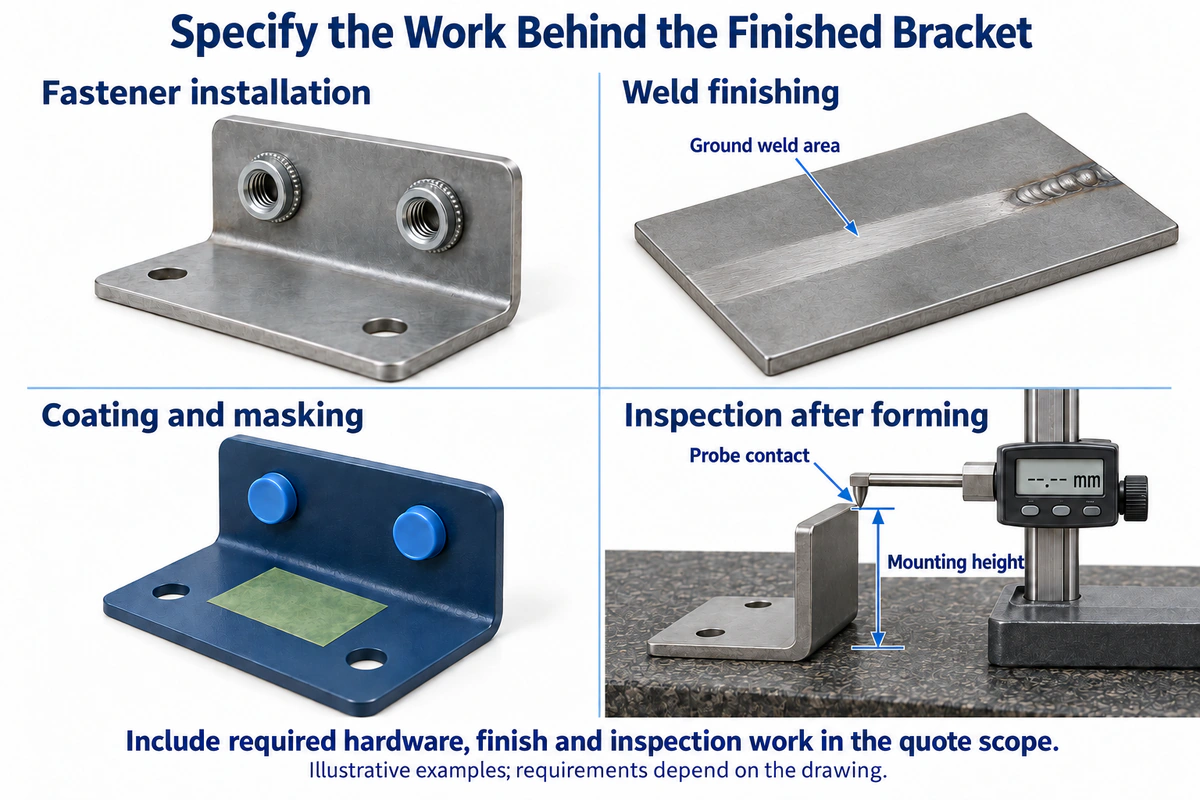
Adding a self-clinching nut involves purchasing the fastener, installing it and carrying out the required checks. Specify the part number, quantity and installation direction. A note such as “add an M4 thread” does not establish whether the design requires direct tapping, an extruded tapped hole, a self-clinching nut or another connection.
Prepare self-clinching fastener holes to the selected fastener's requirements for size, hole-edge condition and edge distance. PEM's installation guidance warns that deburring before installation can remove material needed for clinching. Do not automatically apply the deburring requirements for ordinary cut edges to these installation holes; follow the documentation for the selected fastener.
For welded brackets, the quote also needs to cover positioning the parts, welding, any required weld finishing and inspection. If a visible weld must be ground flush, identify its location and appearance requirements in the request. A general “weld” note can lead suppliers to price different scopes of work.
Tolerances and Finishes Need to Match the Delivered Assembly
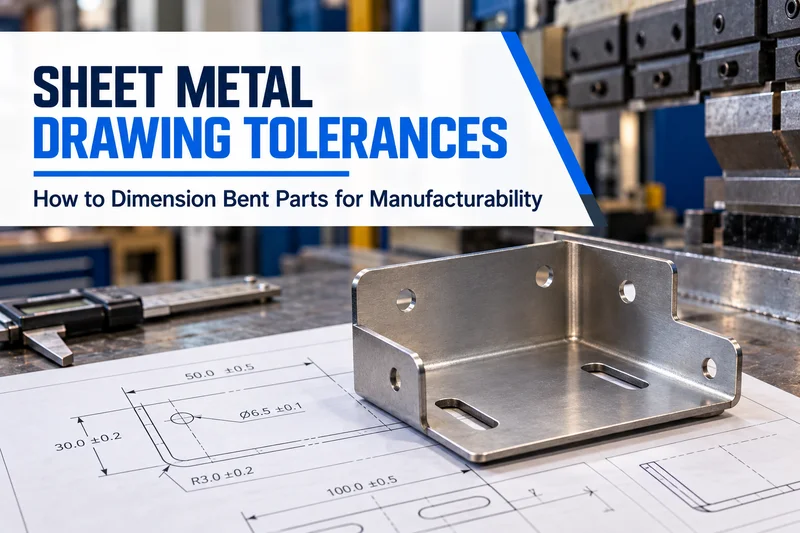
Accurate individual holes do not by themselves establish the relative positions of mounting surfaces after bending. Where dimensions across bends, mounting height, parallelism or mounting-surface form affect fit, define the datums and acceptance conditions. Also state whether measurements apply in the free, restrained or assembled condition. Our sheet metal drawing tolerances guide explains how to communicate these requirements.
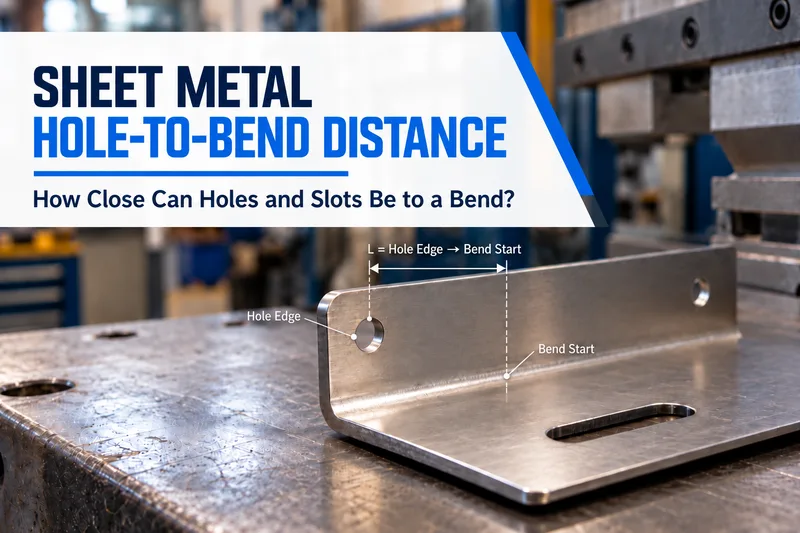
Holes near bends can also affect the route and cost if they need additional work. Use the hole-to-bend distance guide when discussing relocation, relief features or machining after forming.
For powder coating, color is only part of the specification. Pretreatment, texture, protection of cosmetic surfaces, and masking of threads, mating surfaces or electrical contact areas may all add work. Confirm what the coating price includes. For small orders, ask whether a minimum batch charge applies.
Once the finished-part requirements are clear, agree on the records included in the quote, such as material certificates, a first-article dimensional report or results for specified features. Request additional documents before quoting so the supplier can plan the work.
Compare Quotes Against the Same Finished-Part Requirements
Assume that two suppliers quote a control-box mounting bracket to the same drawing revision and order quantity, using the same steel grade and thickness. Their included work differs as follows.
| Item | Quote A | Quote B |
|---|---|---|
| Basic fabrication | Cutting and bending | Cutting and bending |
| Threaded connections | Fasteners excluded | Specified self-clinching nuts and installation included |
| Finish | Deburred, unfinished parts | Specified powder coating and masking included |
| Dimensional checks | Supplier's standard inspection scope | Also includes agreed records of mounting dimensions after forming |
| Packaging and freight | Bulk packaging; freight excluded | Agreed individual protective packaging; freight charged separately |
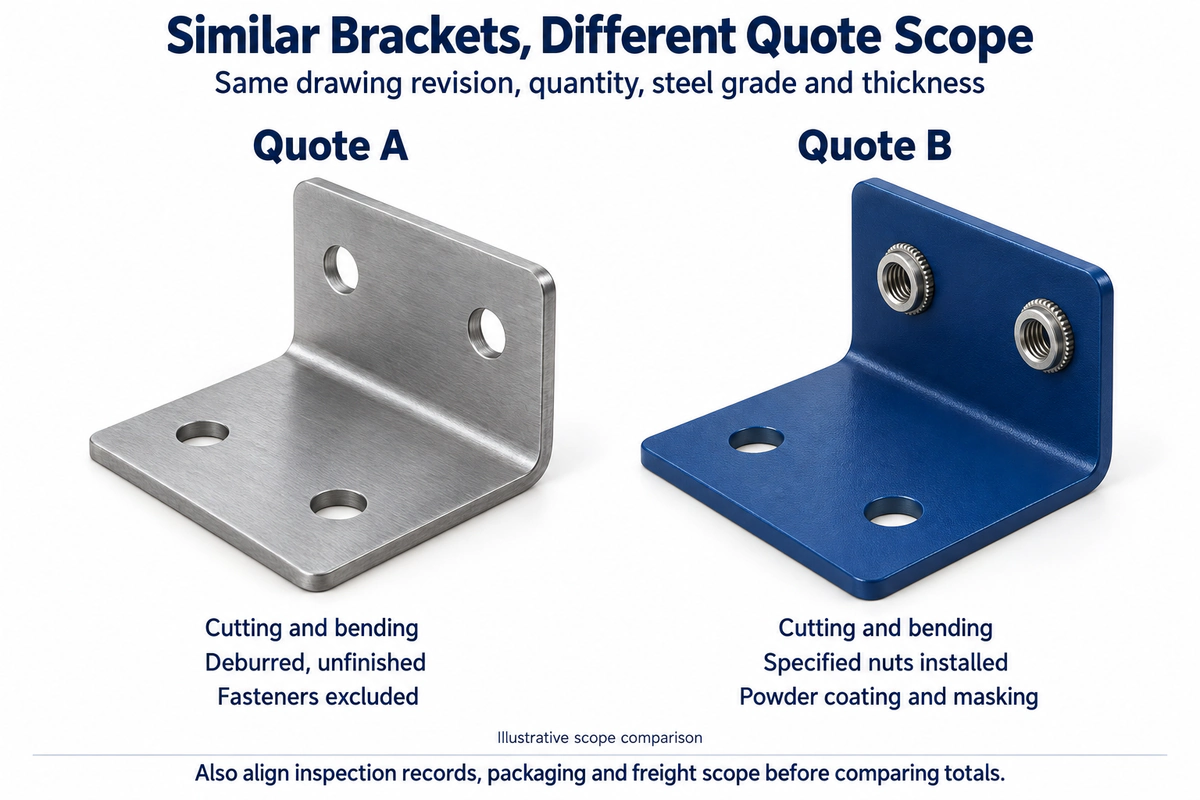
Ask both suppliers to quote the same drawing revision, quantity, fasteners, finish and acceptance requirements before comparing totals. Work omitted from Quote A may need to be purchased elsewhere or added later.
Then check whether setup and tooling charges for each release are already included in the unit price. Compare price validity, delivery location and freight scope as well. For international orders, agree on the delivery terms and who pays the associated costs. This gives you a comparison of the cost to receive the required parts.
When to Compare Cutting and Bending with Stamping
Cutting and press-brake forming can accommodate design changes and use existing bending tools, while still requiring programming, setup and production work. Stamping may require dedicated dies whose cost is spread across repeat production.
Rather than using a universal quantity threshold, ask suppliers to price two feasible routes for the same approved drawing. Compare tooling investment, charges for each release and unit prices against the purchasing plan. Design stability, the number of releases and responsibility for die maintenance all affect the result.
If future quantities are uncertain, request a quote for the confirmed first batch and discuss possible repeat orders as a separate scenario. Treating forecast annual demand as a committed order can understate the tooling cost allocated to the parts actually purchased.
Cost Reductions Worth Reviewing
Ask the supplier to identify features that require tool changes, special positioning, weld grinding or machining after forming. Engineering can then decide which are worth modifying. For example, removing a nonfunctional special flange may avoid an extra operation. Compare that option with alternatives such as changing the material.
Review whether demanding tolerances have been applied too broadly. If only two mounting holes require a precise fit, define their dimensions, positions and inspection method separately. Use requirements suited to the function of the remaining features, and ask the supplier to evaluate any proposed relaxation.
Reducing thickness or adding reinforcement requires a review of loads, deflection, connections and manufacturing conditions. A percentage reduction in material mass is not a reliable estimate of the finished-part saving. Quote the engineering-approved alternatives to see whether additional forming, tooling or validation offsets the material saving.
You can also check whether one project really needs several thread sizes, fasteners or similar finish colors. Where fit and appearance allow, standardize those specifications and compare the resulting purchasing, installation and batch-processing costs.
Send a Complete Request for Quote
Include the following in one package:
- Current drawings and models, with the part number, revision and units. If files differ, identify which requirements take precedence.
- Material grade, condition or temper, thickness and any alternatives open for discussion.
- First-batch quantity, expected release quantities, delivery frequency and any unconfirmed future demand.
- Fastener part numbers and installation directions, weld scope and areas requiring further machining.
- Finish specifications, cosmetic surfaces, masking locations and surface requirements affecting fit.
- Critical assembly dimensions, measurement conditions, inspection scope and required records.
- Protective packaging, delivery location and preferred arrival date, so production and transport can be considered separately.
Useful price comparisons start with consistent drawings, quantities and finished-part requirements. Share these details with Tongyong to discuss manufacturing routes, possible design changes and the quotation scope for your custom sheet metal brackets and mounting components.
Information Sources
- Boothroyd Dewhurst — Sheet Metal Fabrication Cost Estimating How Cost Works.
- PennEngineering PEM — Self Clinching Nut Fastener Installation Do’s And Don’ts.
The monetary example illustrates cost allocation only. Actual quotations depend on the drawings and agreed scope of supply.
FAQ
Can You Directly Compare Standard L-Bracket Prices with Custom Bracket Quotes?
Check whether the standard part meets the hole locations, dimensions, material, finish and operating requirements. If it does, it is worth comparing as a purchasing option. If it needs extra holes, a different mounting arrangement or refinishing, include the modification, purchasing and verification work. A retail stock price and a made-to-drawing quote are comparable only when the scope of supply is equivalent.
Are Aluminum Brackets Always Cheaper Than Steel Brackets?
No. Lower weight alone does not determine the price. Grade, thickness, geometry, stock sizes, processing and finishing all affect the finished cost. If either material is suitable, have engineering establish the design and thickness each requires, then compare quotes against the same functional and delivery requirements.
Will You Pay for Stamping Tooling Again on Repeat Orders?
Agree on ownership, storage, maintenance, changes and reuse when obtaining the first quote. Existing tooling may avoid making a new die, but repeat orders can still involve tool installation, setup, first-article checks or maintenance charges. If the drawing changes, confirm whether the existing tool remains usable.
Can a Photo or Hand Sketch Be Used for an Initial Estimate?
It can support a discussion of the application and budget, provided the estimate states its assumptions about dimensions, material, quantity and processing scope. Proportions in a photo do not replace measurements. Before ordering, confirm the drawings, critical dimensions, material and acceptance requirements, and update the quote accordingly.